Do you know how to plant tea plants ?
The mature tea plant is a robust evergreen shrub that can withstand a variety of weather conditions. It thrives in acidic, well-drained or sloping soil. It is not sensitive to cold, withstanding frosts down to -15°C. In summer, it tolerates heat well but appreciates shade and regular, generous watering. This is typical of the mountains of tropical Asia, where it originates, as it is found naturally in Asia, particularly in southern China, India and Sri Lanka. It grows slowly but can reach several metres in height if left unpruned, particularly if its terminal leaves are not removed.
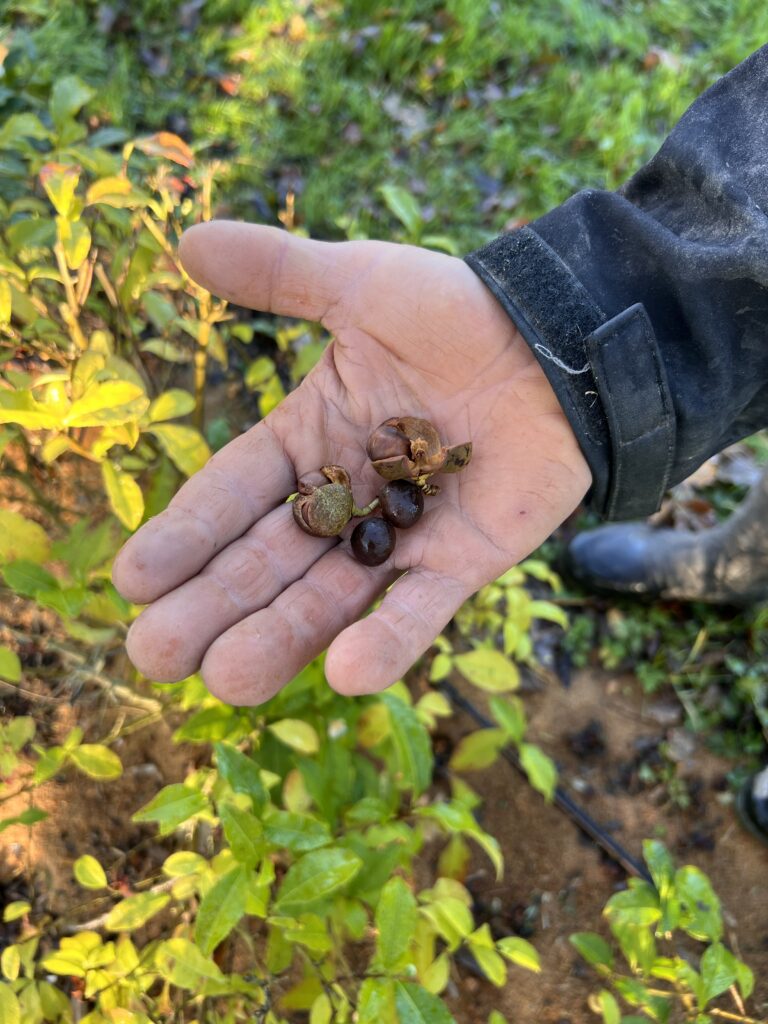
From the age of three, the plant begins to produce pretty white flowers with multiple yellow stamens. It has the distinctive feature of flowering all year round. The tea plant is pollinated by various insects, including the Asian hornet, which can still be found on the plantation in November despite the cold weather! The flower is gradually replaced by a green ball, a kind of husk usually containing three seeds that can measure up to 6 to 8 mm in diameter.
At Fabrikathé, as on plantations around the world, autumn is the season when these pods turn brown before opening and releasing the tea seeds onto the ground. These seeds are carefully collected to propagate the plant, as cuttings and layering have not yielded good results. But what happens to the seeds next ?
Planting the seeds
Tea seeds fall when the cold weather arrives, between October and January, and are collected immediately.
They are stored at room temperature and then placed in the refrigerator for a few days before sowing.
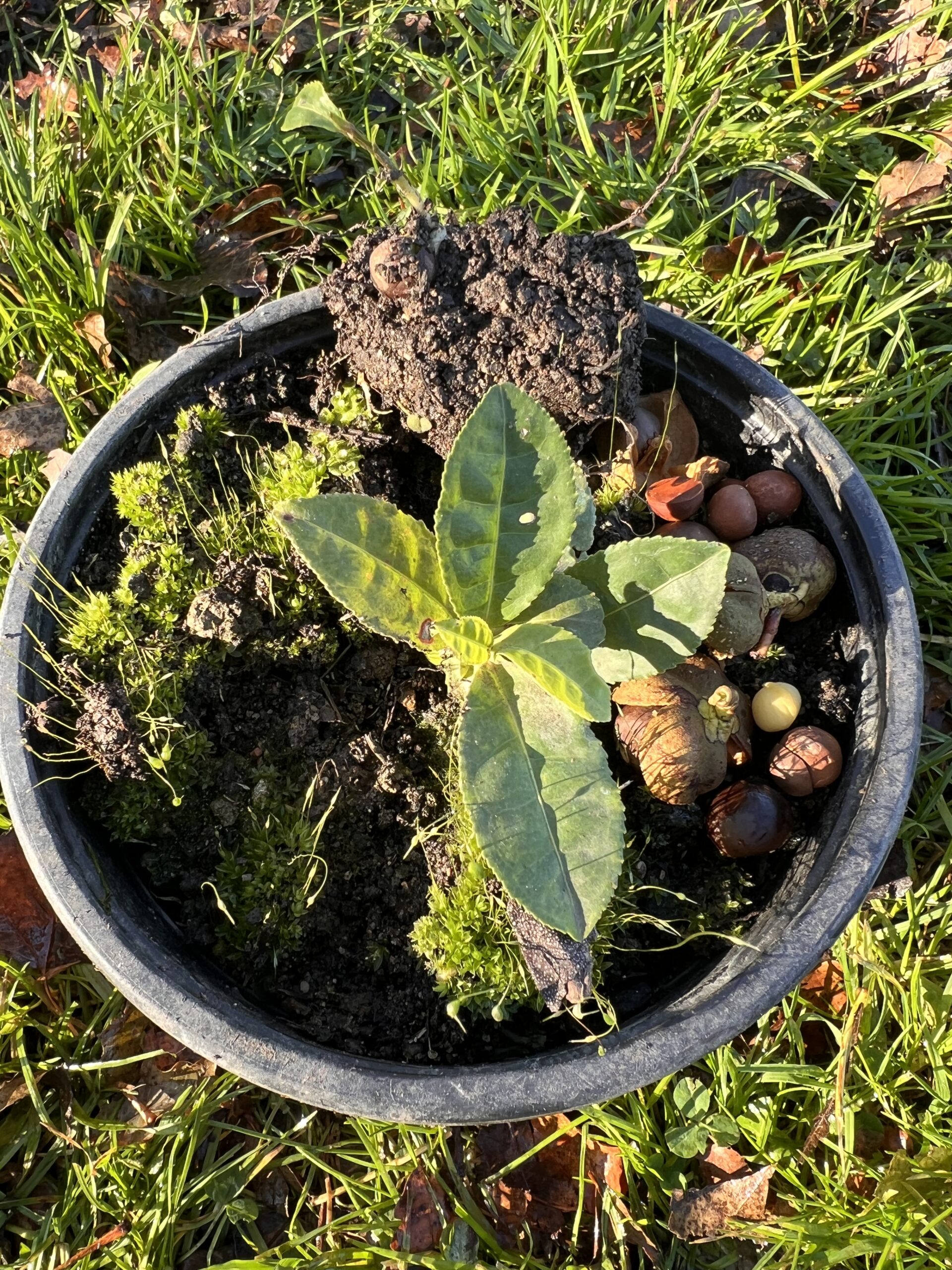
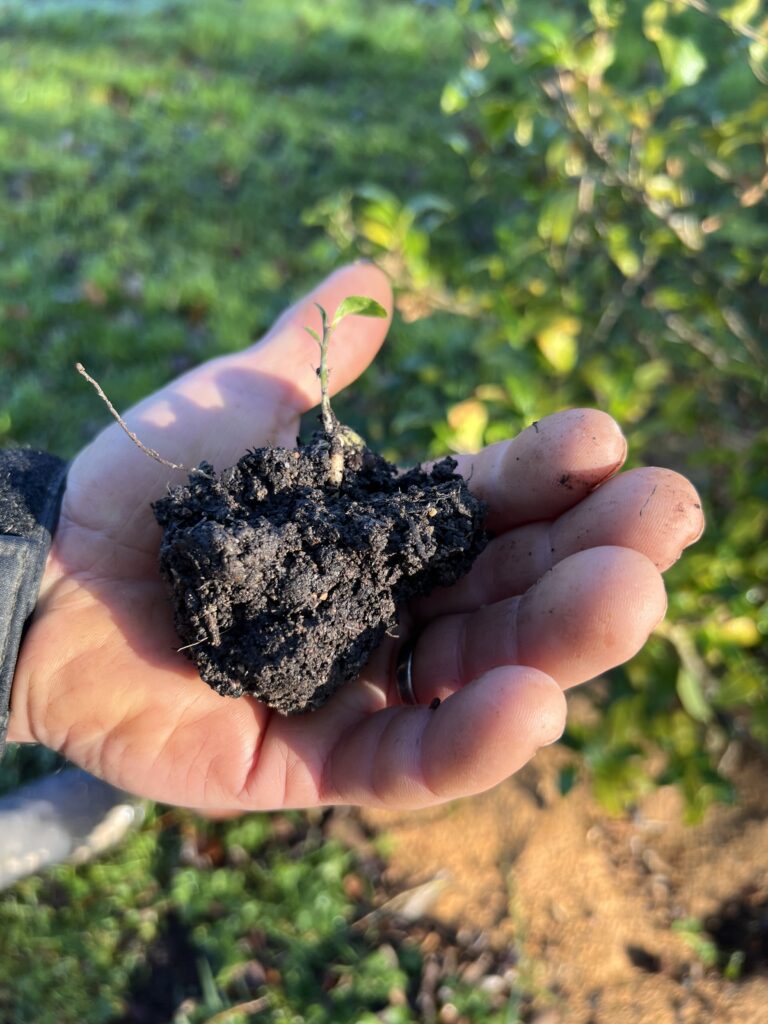
At the Pouilly-les-Nonains plantation, the seeds are not planted directly in the ground after this simulated winter cold spell. They are initially placed in pots, in a mixture of 60% heather soil and 40% soil from our fields, to allow them to germinate while acclimatising to our local soil. Germination takes a very long time! It takes several months for the seeds to produce a stem with leaves, and this stage is achieved by keeping the soil moist and maintaining a constant temperature of around 20°C. The first repotting takes place at the 10-12 leaf stage, usually in spring in a watered greenhouse to optimise growth.
Acidify the soil
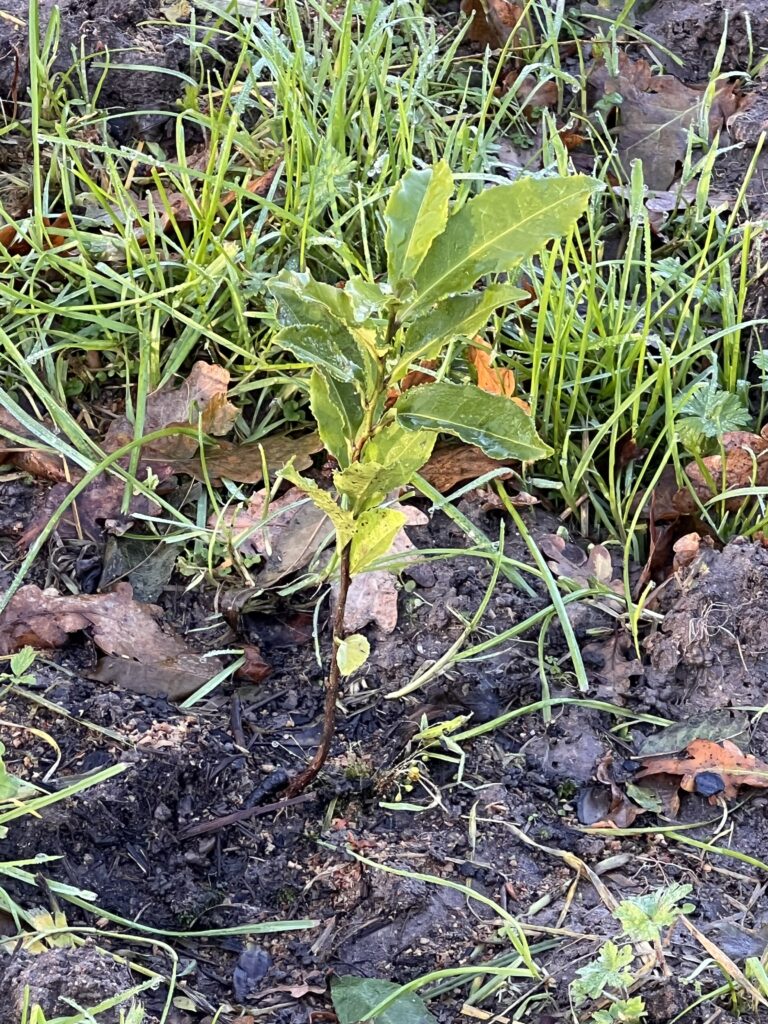
On average, a year later, it is time to plant the seedlings in the ground. The young plants now have strong roots, capable of absorbing the nutrients they need to continue growing outdoors. Here in Pouilly, the main challenge is the acidity of the soil. Our field workers are committed to meeting this challenge: acidifying the soil in our very clayey fields as much as possible. To do this, shredded softwood (pine bark, fir bark, etc.) is placed around the base of the tea plants to provide them with the nutrients they need to thrive in Pouilly-les-Nonains. Softwood sawdust is even added to the mixture used in the planting holes !
Growing tea plants requires a lot of patience !
Once planted, it will take another three to four years for the shrubs to reach a height of 1m to 1.2m with around thirty branches each! And in the best-case scenario, with no drought or other adverse weather conditions, the first harvest will not take place for at least five to seven years… provided that the shrubs are protected from deer, their main enemy.
Did you know ?
The tea plant belongs to the camellia family. Its binomial name is Camellia sinensis, referring to China, its supposed place of origin.
But it is not its flowers that interest us in this case. Although it keeps its leaves all year round, it is its tender new shoots that are picked, fermented and dried in various ways to produce black, green or white tea.